Choosing a sound system is one of the few event decisions with no second chance. If the back of the room cannot hear the speaker, nobody remembers the catering. This guide covers how we specify systems for events across Nairobi and Kenya, and what you should be asking before you sign anything.
Start with the venue, not the speaker list
The room decides the rig. A hotel ballroom with hard reflective walls behaves nothing like an open field in Karen or a church with a high timber ceiling. Reflective surfaces return sound late, which smears speech and makes a system that measures fine sound muddy in practice. Open sites lose low frequencies to the air and to wind, so a system that sounds full indoors can sound thin outside.
Before quoting, we want the venue name, the room dimensions if it is indoors, and whether the audience will be seated or standing. Standing crowds absorb far more sound than empty chairs, which changes the specification.
Size by headcount, then check the shape
A rough working figure for an indoor event is about 1,000 watts of system power per 100 people, but treat that as a sanity check rather than a formula. Coverage shape matters as much as raw power. A long narrow room needs delay positions so the back rows hear the same programme as the front, at the same time. A wide shallow room needs horizontal dispersion instead.
The three system types you will be offered
Portable PA suits audiences up to roughly 200: speeches, small corporate sessions, intimate performances. Quick to deploy, easy to move between rooms.
Column or point-source systems cover medium venues well, typically 200 to 800 guests, and stay visually discreet. A common choice for weddings and conferences.
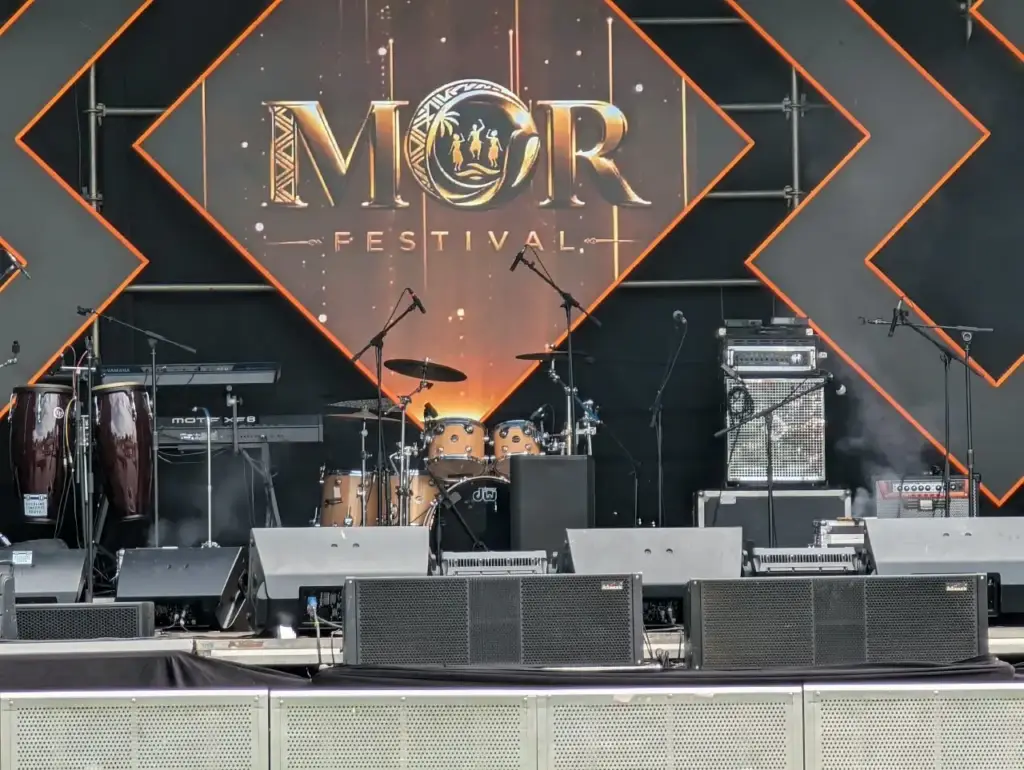
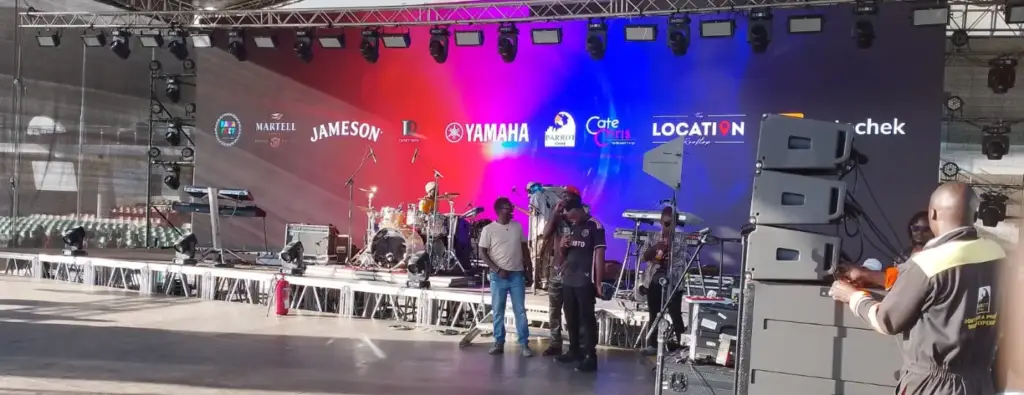
Line arrays are the standard for large events. Flown properly they project evenly to the back of a field or stadium while keeping the front rows comfortable. They need rigging points, competent riggers and time to build, so they belong on events where the schedule allows a proper load-in.
Do not leave monitors out of the budget
Monitors are what performers and speakers hear. Without them a singer pushes their voice to compensate, a presenter drifts off the microphone, and both sound worse to the audience. Wedge monitors work for most stages; in-ear systems suit touring acts and anyone who needs consistent sound while moving. Whichever route you take, budget for it at the start rather than discovering the gap at soundcheck.
Questions worth asking any hire company
Ask whether an engineer is included or charged separately, and whether they stay for the whole event or leave after setup. Ask what spares travel with the rig. Ask who is responsible for power, especially outdoors, and whether generator sizing is included in the quote. Ask what happens if it rains. The answers tell you more about a supplier than the equipment list does.
Work with people who assess your event specifically
Packages sold by tier rather than by venue are guesswork. At Backline Concepts we specify against the actual room, the actual headcount and the actual programme, then include delivery, rigging, soundcheck and an engineer who stays until load-out. If you want a specification for your event, send us the date and the venue and we will come back within 24 hours.