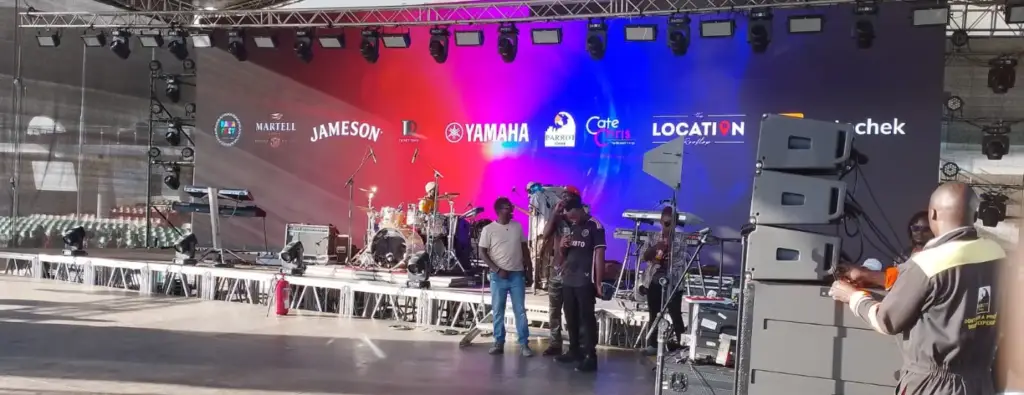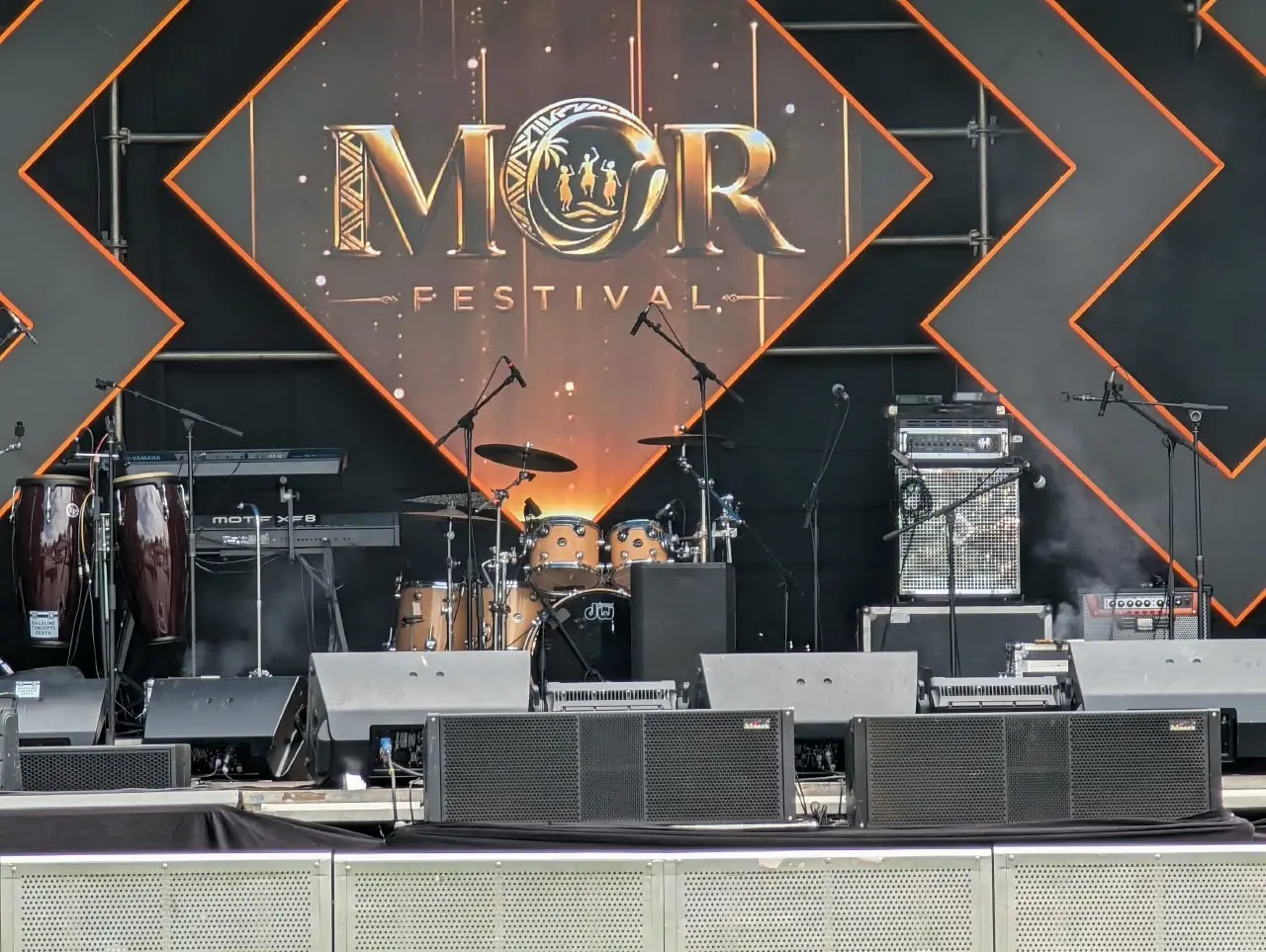
Short answer: Backline is the equipment musicians play on and through on stage: the drum kit, bass and guitar amplifiers, keyboards and their stands, plus the DI boxes, microphones and stands that connect them to the sound system. When you hire backline, the band travels with only personal items and plays on gear that is delivered, set up and checked for them. Backline Concepts supplies backline from Nairobi to events across Kenya and East and Central Africa.
Whether you are booking a band for a wedding, running a church crusade or putting on a festival with ten acts, backline decides how smoothly the stage runs. Get it right and changeovers are quick, every musician hears themselves, and the sound engineer is not rebuilding the desk between acts. Get it wrong and the programme slips before the first song.
This guide uses photos from stages we have supplied in Kenya. Tap through a real festival backline, build a rider for your lineup, search the glossary and tick off the event-day checklist as you go.
What is backline?
Backline is everything on stage that the performers play or stand in front of. The name comes from the row of amplifiers that used to line the back of the stage behind the band. Today it covers four groups of equipment:
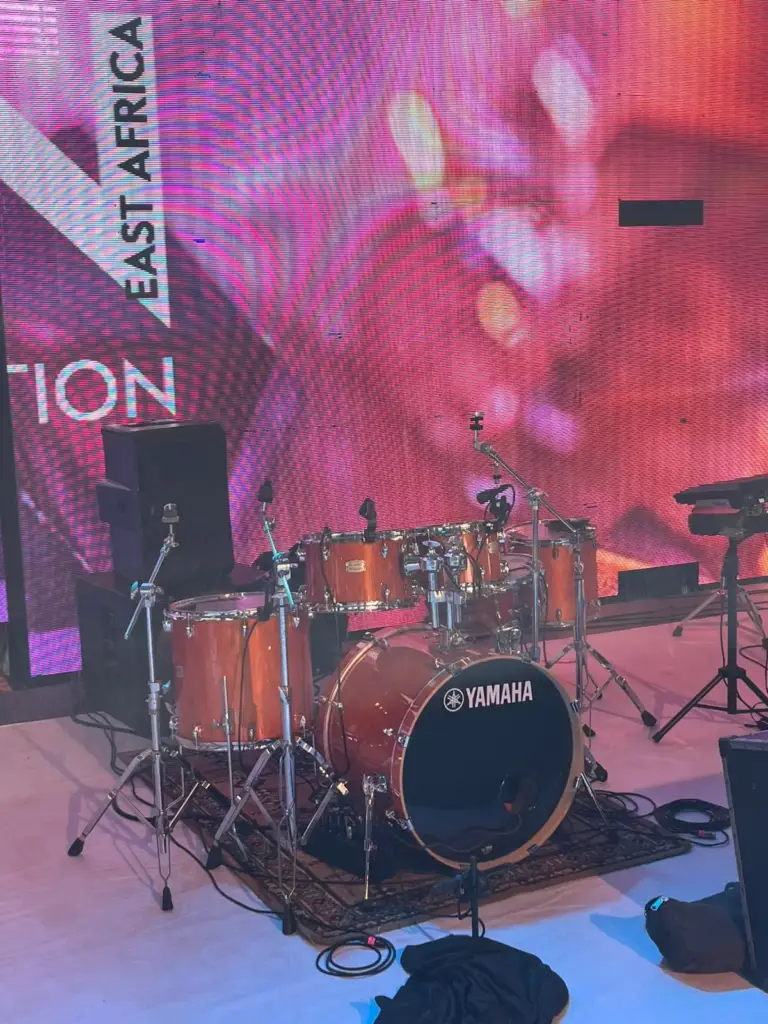
- Drums and percussion: the kit, its hardware and cymbal stands, congas, and a drum rug.
- Amplifiers: bass rigs and guitar combos.
- Keyboards: the instruments, their stands and pedals.
- Connections: DI boxes, microphones, stands and cables that feed the mixing desk.
Backline is not the PA system. The two are usually hired together, but they do different jobs.
| Backline | PA system | |
|---|---|---|
| Who it serves | The musicians on stage | The audience |
| Examples | Drum kit, amplifiers, keyboards, stands, DI boxes | Line arrays, subwoofers, amplifiers, the front of house desk |
| Where it sits | On stage, around the players | Flown or stacked either side of the stage, with the desk in the audience area |
| Who runs it | Backline technicians and the players | Sound engineers |
Explore a real stage, piece by piece
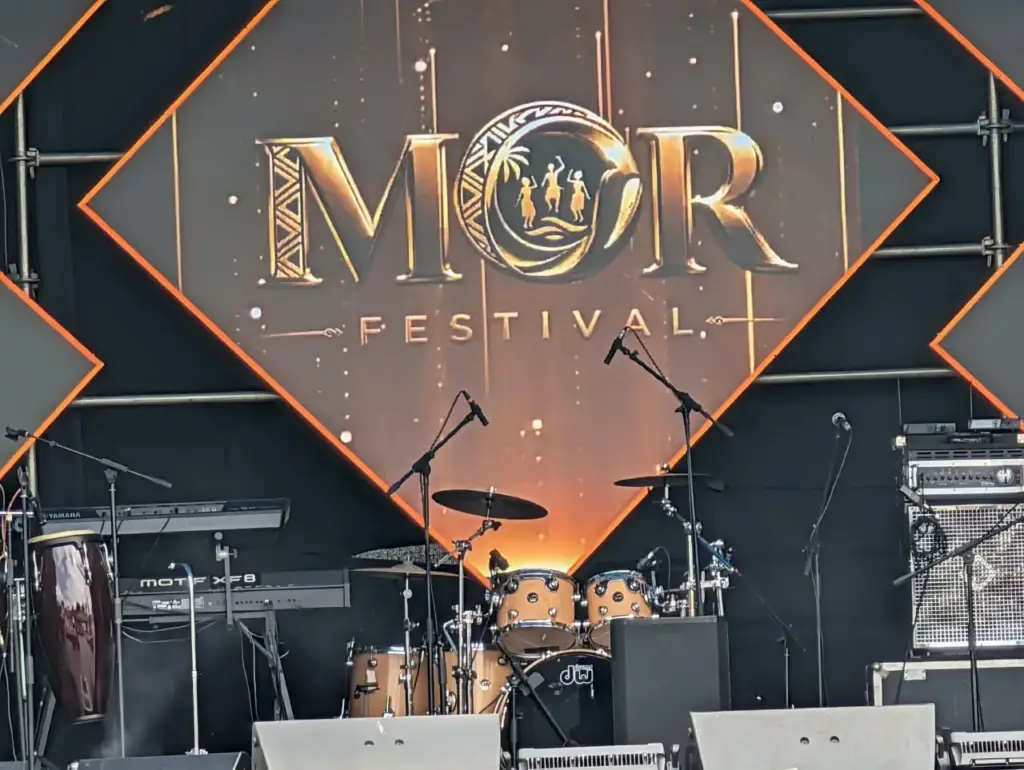
This is the MOR Festival stage with the full backline in place and no band on stage yet. Tap a number on the photo, or a label below it, to see what each piece does and what to ask for when you hire it.
Drum kit
The centre of any band backline. This one is a DW kit, set with its kick, snare and toms and ready for microphones.
Ask for: a five-piece kit with sizes, the hardware, a throne and a drum rug. Say whether the drummer brings their own cymbals, snare or pedal.
Drum microphones
Microphones on booms above and around the kit pick up each drum and the cymbals for the PA and for the monitor mixes.
Ask for: microphones on the kick, snare, hi-hat, each tom and two overheads. That is usually eight channels on the input list.
Keyboards
A Yamaha keyboard above a Yamaha Motif XF8 on a two-tier stand, so one player can reach two instruments.
Ask for: the exact models if the player relies on their sounds, a two-tier stand, a sustain pedal and two DI channels per keyboard.
Congas
Percussion is backline too. The congas sit on their own stands beside the keyboard rig, within reach of the drummer.
Ask for: the drums and sizes, stands, a stool at the right height and a clip-on microphone for each drum.
Bass rig
An amplifier head on a large speaker cabinet gives the bass player their sound on stage.
Ask for: a head and cabinet, or a combo, sized to the room, plus a DI box so the desk also gets a clean signal.
Microphone stands
Stands hold the vocal and instrument microphones at the right height and angle for each performer.
Ask for: the number of stands, and whether each needs a boom arm or a straight pole.
Wedge monitors
Floor speakers angled back at the performers so they can hear themselves over the PA.
Ask for: one monitor mix per performer, or in-ear monitors if the stage needs to stay quiet.
What a standard backline includes
Every lineup is different, but most riders ask for the same core items for each instrument. Pick an instrument to see what to specify, with a photo of the real thing from our stages.
Drums
Riders usually ask for:
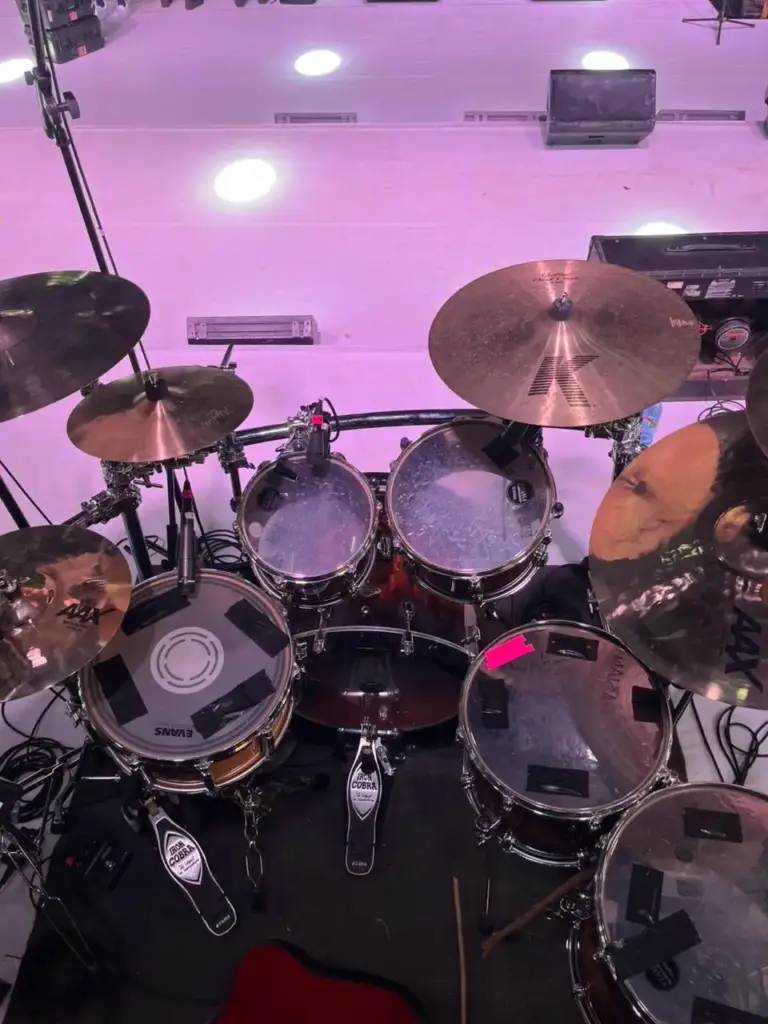
- A five-piece kit: kick, snare, two rack toms and a floor tom
- Hardware: hi-hat stand, cymbal booms, snare stand, kick pedal and a throne
- A drum rug, and a riser if the stage plot shows one
- Microphones for the kick, snare, hi-hat, toms and two overheads
Tip: say whether the drummer brings their own cymbals, snare or pedal. Many do, and it changes what goes on the truck.
Bass
Riders usually ask for:
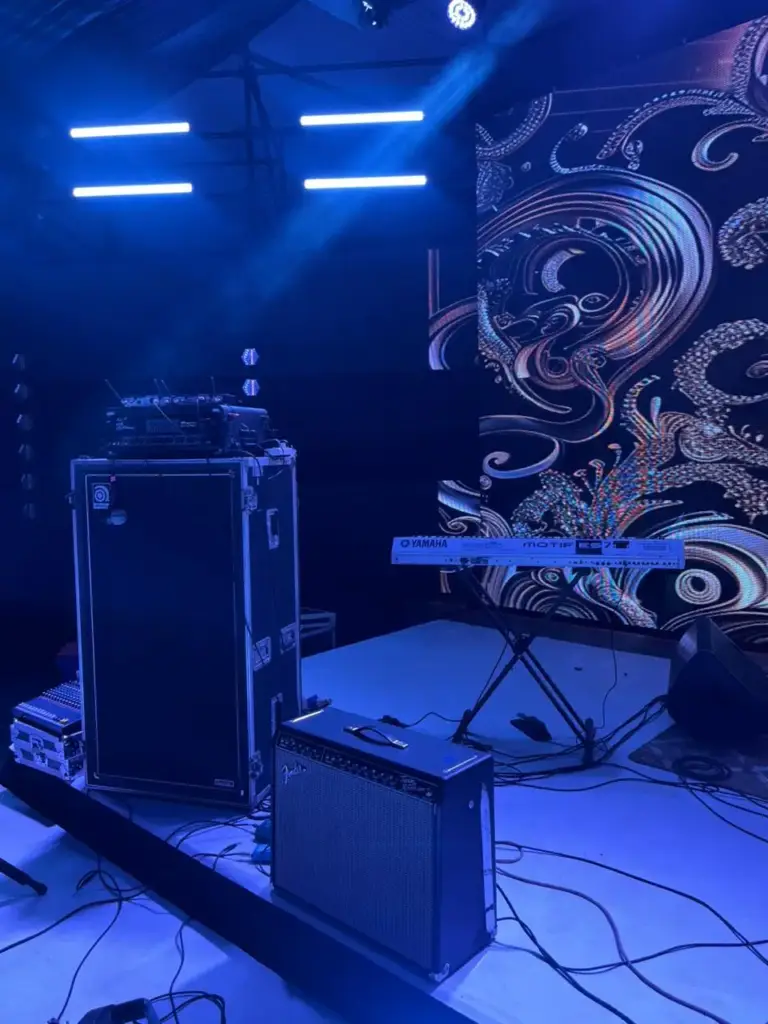
- An amplifier head and cabinet, or a bass combo, sized to the room
- A DI box, so the desk gets a clean signal as well as the amplifier’s stage sound
- An instrument stand
Tip: if the bass player uses in-ear monitors, the amplifier can run lower, which keeps the whole stage quieter.
Guitar
Riders usually ask for:
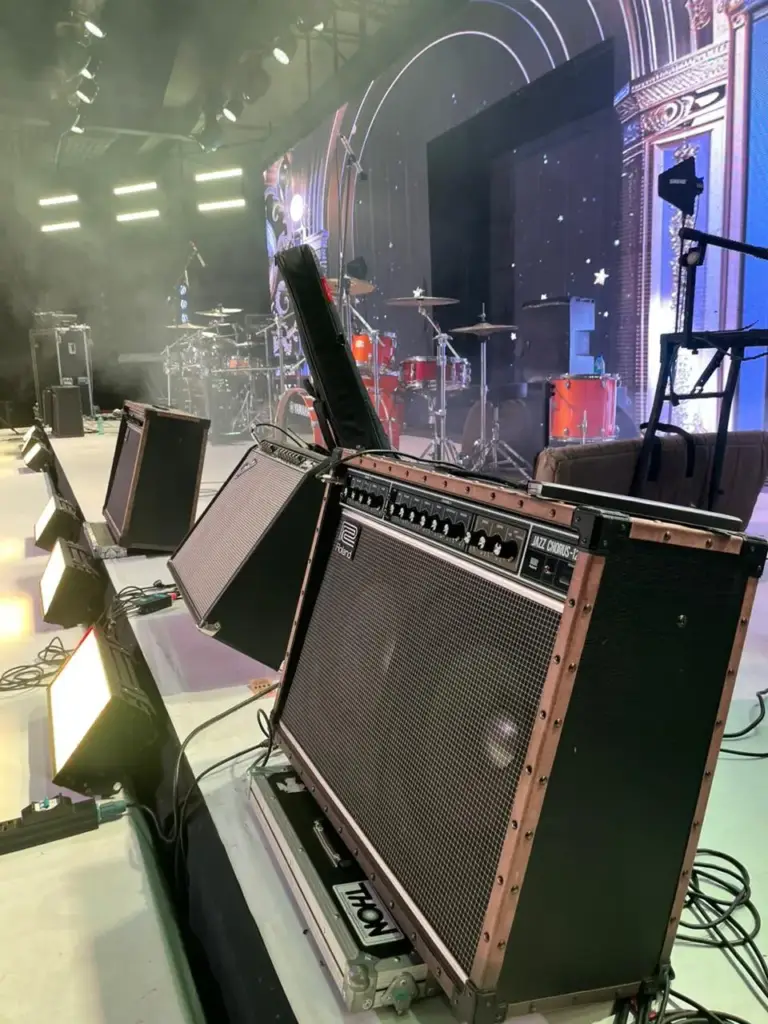
- A combo amplifier for each guitarist, often a Roland JC-120 or Fender Twin class
- A microphone on the amplifier’s speaker
- A power point at the pedalboard and an instrument stand
Tip: guitarists bring their own guitars and pedalboards. The backline supplies the amplifier and everything around it.
Keys
Riders usually ask for:
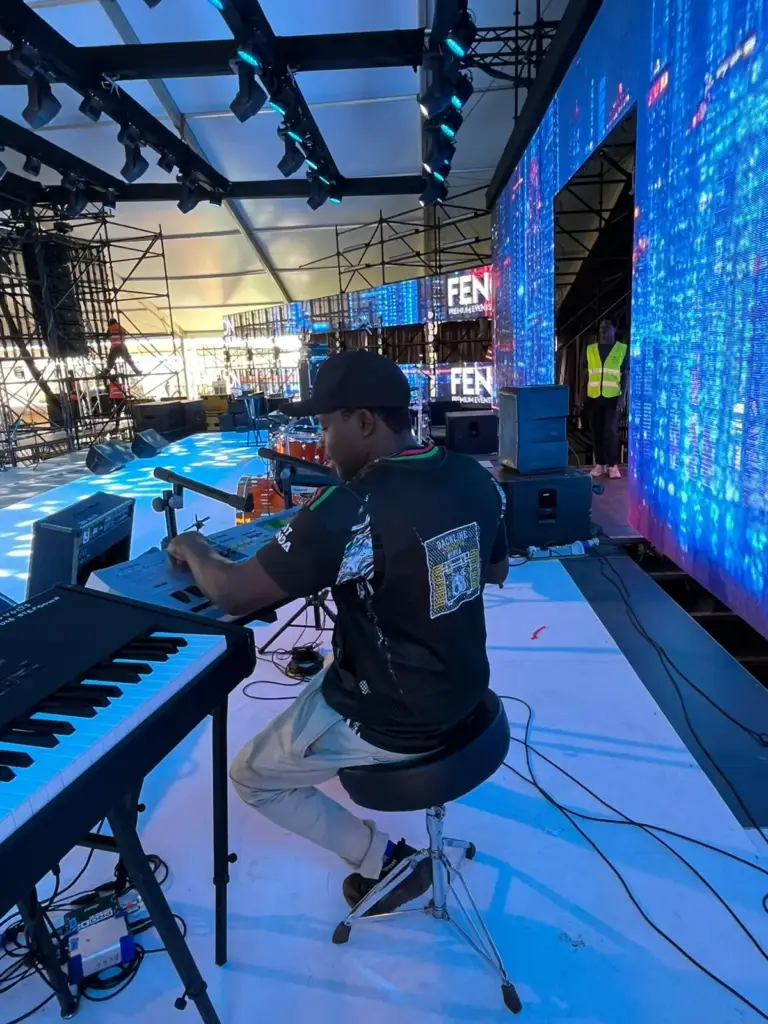
- The keyboards the player specifies, from an 88-key weighted piano to a synth workstation
- A two-tier stand when one player uses two boards
- A sustain pedal, and an expression pedal if asked for
- Two DI channels per keyboard, because keyboards send a stereo signal
Tip: name the exact model if the player relies on its sounds. A patch built on one keyboard rarely transfers cleanly to another.
Percussion
Riders usually ask for:
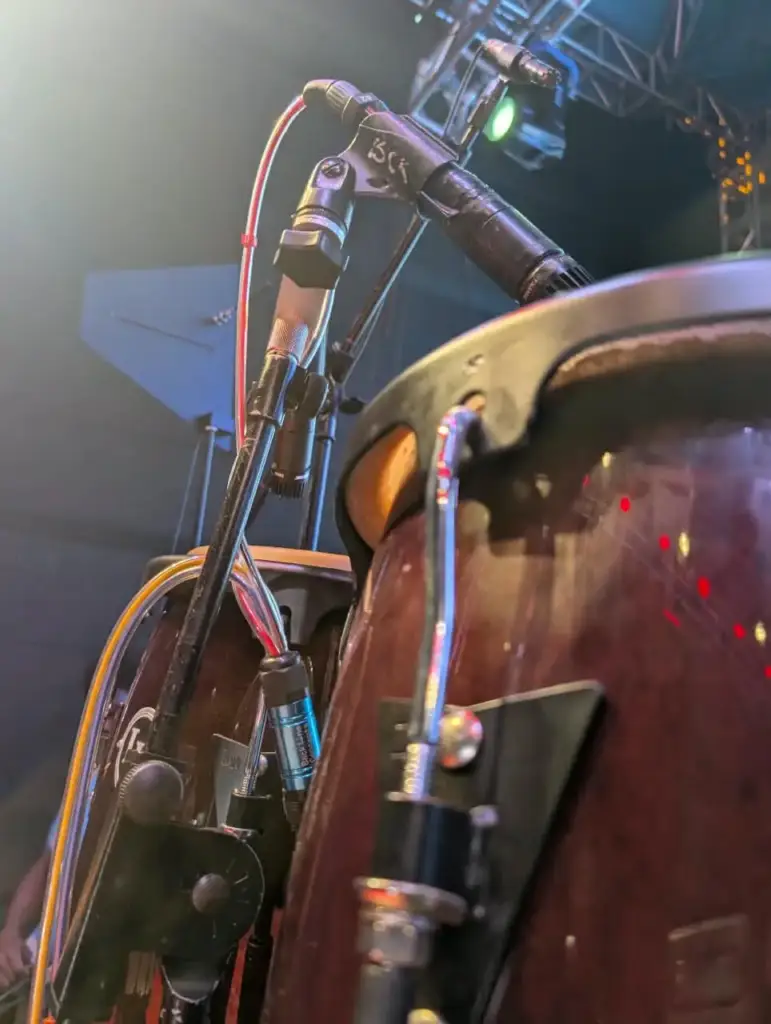
- Congas, bongos or a cajon as the rider lists, with stands
- A clip-on microphone for each drum
- A stool at the right height
Tip: percussion usually sits beside the kit, so leave room for it on the stage plot and a monitor mix for the player.
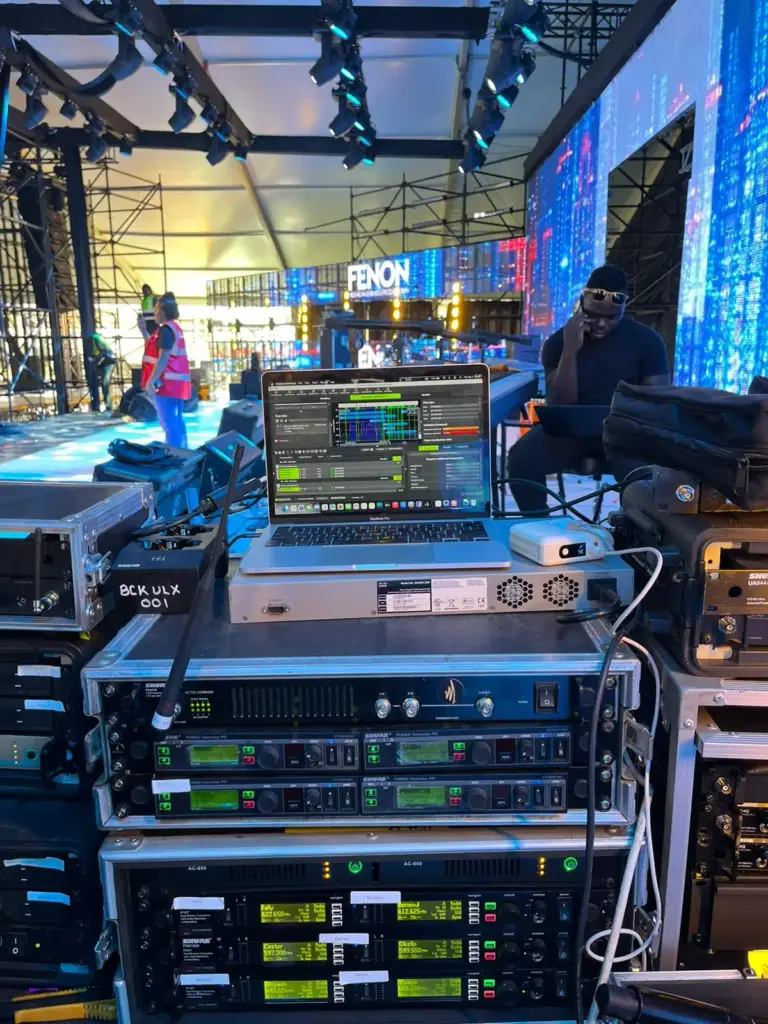
Vocals and wireless
Riders usually ask for:
- A wireless handheld microphone for each singer, plus spares
- A boom or straight stand for each microphone
- Frequency coordination, so wireless systems do not clash with other equipment on site
- Fresh batteries or charged packs for every show
Tip: tell us how many singers share microphones between acts. It decides how many wireless channels need coordinating.
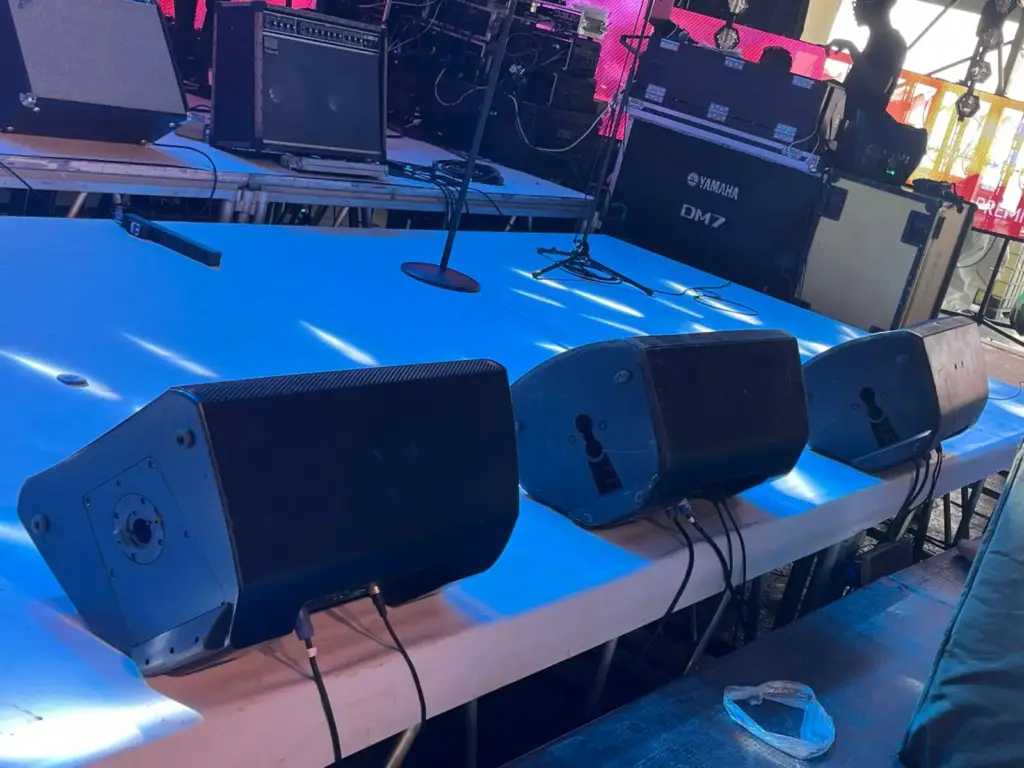
Monitors
Monitoring is strictly part of the sound system, but it is almost always on the same rider. Riders usually ask for:
- Wedge monitors: floor speakers pointed back at the performers
- Or in-ear monitors: a personal mix in each performer’s ears, and a quieter stage
- One monitor mix per performer, or per group of singers who can share
Tip: for choirs and worship teams, in-ear monitors usually beat wedges. We run immersive in-ear mixing on a KLANG processor. Read how it worked at Rhema Feast.
Build your backline rider in a minute
Choose a starting lineup, then adjust the numbers. The list updates as you go, with an estimate of the inputs, DI channels, monitor mixes and microphone stands your show needs. Copy it into an email or attach it to a quote request.
Start from
Lineup
These are typical starting points, not a final specification. Backing singers can often share a monitor mix, and every engineer adjusts for the venue and the artists. We confirm the details with you before the event.
How to write a backline rider
A backline rider is the part of a technical rider that lists the equipment a band needs on stage. A clear one saves a round of phone calls and prevents surprises on the day. Write it in this order:
- List the lineup. Every performer and what they play, including doubles such as keys and vocals.
- Specify each instrument's gear. Kit sizes, amplifier models or class, keyboard models and anything that cannot be substituted.
- Say what you bring. Instruments, pedalboards, cymbals, sticks and in-ear moulds, so nothing is doubled or missing.
- Add an input list. Every microphone and DI in channel order. The rider builder on this page gives you a starting count.
- Draw a stage plot. Where each performer, amplifier, monitor and power point sits. A clear photo of a hand sketch is enough.
- State monitoring and timings. Wedges or in-ear monitors, how many mixes, and the load-in, soundcheck and set times.
Send that with the date and the venue and we will turn it into a specification and a price.
House backline or bring your own?
At multi-act events the biggest decision is whether every act shares one house backline or brings its own. For festivals, church events and conferences, a shared house backline almost always wins. In our experience it cuts changeovers from around forty minutes to under ten.
| Shared house backline | Each act brings its own | |
|---|---|---|
| Changeovers | Quick, because the gear stays set and patched | Slow, because every act rigs and re-patches |
| Sound | Consistent all day; the engineer knows every input | Changes act to act, with a fresh line check each time |
| Risk | Spares on site and one crew responsible | Depends on the condition of each act’s gear |
| Logistics | One delivery, one setup, one strike | Many vans, load-ins and storage spaces |
| Best for | Festivals, church events, conferences, multi-act bills | A touring band with its own rig on a single long set |
Artists still bring what is personal to them: their guitars, pedalboards, sticks, and often cymbals and in-ear moulds. That is how we run Rhema Feast, where many worship teams and bands play on one shared backline across a five-day programme.
Event-day backline checklist
Use this on the day, or share it with your production manager. Your ticks are saved on this device, so you can close the page and come back to it.
0 of 12 done
Backline glossary
Stage crews use a lot of shorthand. Search this glossary for any term you meet in a rider or on a production call.
23 terms
- Backline
- The equipment musicians play on and through on stage: drums, amplifiers, keyboards, stands, and the DI boxes and microphones that connect them to the sound system.
- House backline
- One shared set of backline used by every act on a bill, set up and patched once so changeovers stay short.
- Technical rider
- An artist's full list of technical needs, covering backline, sound, monitoring, power, stage layout and timings.
- Backline rider
- The part of a technical rider that lists the stage equipment a performer needs, often with preferred models.
- Stage plot
- A drawing of where each performer, instrument, amplifier, monitor and power point sits on stage.
- Input list
- A numbered list of every signal going to the mixing desk, with each microphone and DI in channel order.
- DI box
- Direct injection box. It turns an instrument's output into a balanced signal the mixing desk can take over a long cable without noise.
- Combo amp
- An amplifier and speaker in one cabinet, common for guitar. Riders often name a class such as the Roland JC-120 or the Fender Twin.
- Head and cabinet
- A separate amplifier, the head, sitting on a speaker cabinet. It is the usual bass setup on larger stages.
- Drum riser
- A raised platform for the drum kit that lifts the drummer into view and gives the kit a fixed, marked position.
- Drum rug
- A rug under the kit that stops the drums and pedals creeping across the stage while they are played.
- Wedge
- A floor monitor speaker angled up at a performer so they can hear themselves on stage.
- In-ear monitors (IEM)
- Earpieces that carry a personal monitor mix, usually through a wireless pack, and keep the stage quieter than wedges.
- Immersive in-ear mixing
- In-ear monitoring that places each sound source around the listener in 3D, so performers hear a natural stage rather than a flat mix.
- Monitor mix
- The blend of instruments and voices a performer hears on stage, separate from what the audience hears.
- Front of house (FOH)
- The mixing position in the audience area, and the engineer responsible for what the audience hears.
- Line check
- A quick test that every input reaches the desk cleanly, done before soundcheck and again between acts.
- Soundcheck
- A run-through with the performers to set levels and monitor mixes before the audience arrives.
- Changeover
- The time between acts when the stage is reset for the next performer.
- Stage box
- The box on stage where microphones and DIs plug in, carrying every channel to the desk over one cable or network.
- Wireless coordination
- Planning radio frequencies for every wireless microphone and in-ear pack on site so none interfere with each other.
- Click track
- A metronome sent to the drummer's in-ears, and often the whole band's, to keep time with playback.
- Dante
- A network system that carries many channels of audio over a single ethernet cable between the stage and the desk.
No term matches that search. Try a shorter word, such as monitor or DI.
Backline hire across Kenya and East Africa
We are based in Nairobi and deliver backline across the city and its surrounds, including Westlands, Kilimani, Karen, Lavington, Runda, Gigiri, Upper Hill, Thika Road and the CBD. Countrywide, we work in Nakuru, Naivasha, Mombasa, Diani, Kisumu, Nanyuki, Eldoret and Machakos, and we travel for larger productions across East and Central Africa. Transport and crew nights are quoted as a separate line, so you can see exactly what the distance costs.
Every hire includes delivery, setup and collection through our backline equipment rental in Nairobi. Add artist support and stage setup for line checks and fast changeovers, or technical support to keep a technician on site for the whole show.
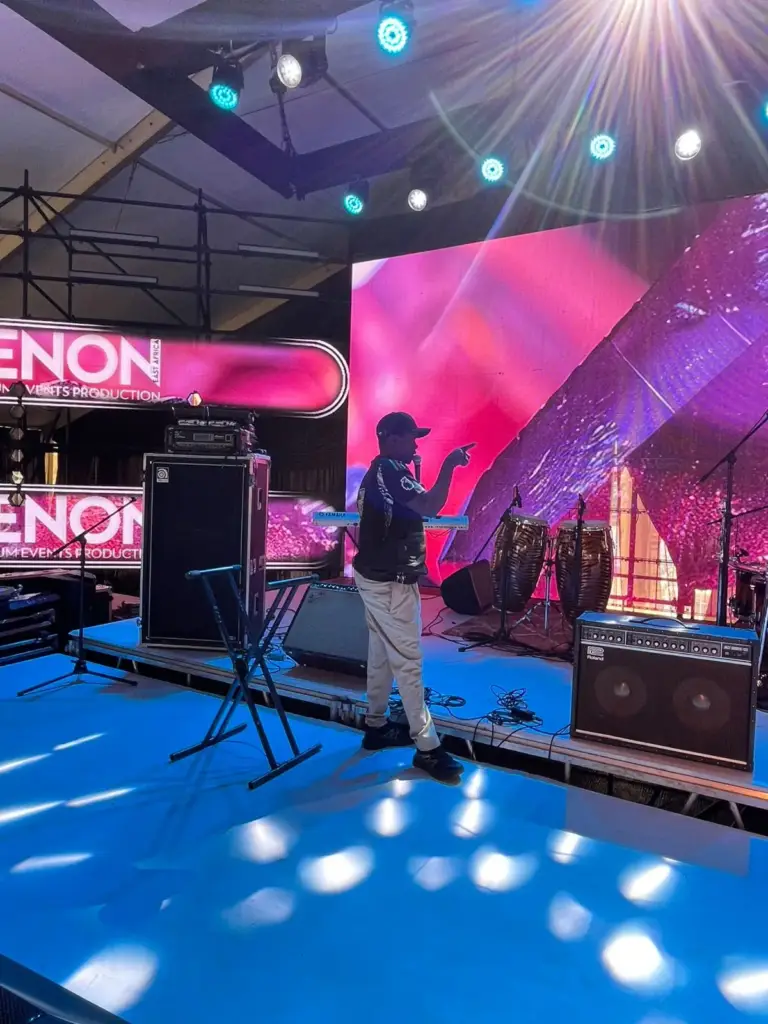
More backline from our stages
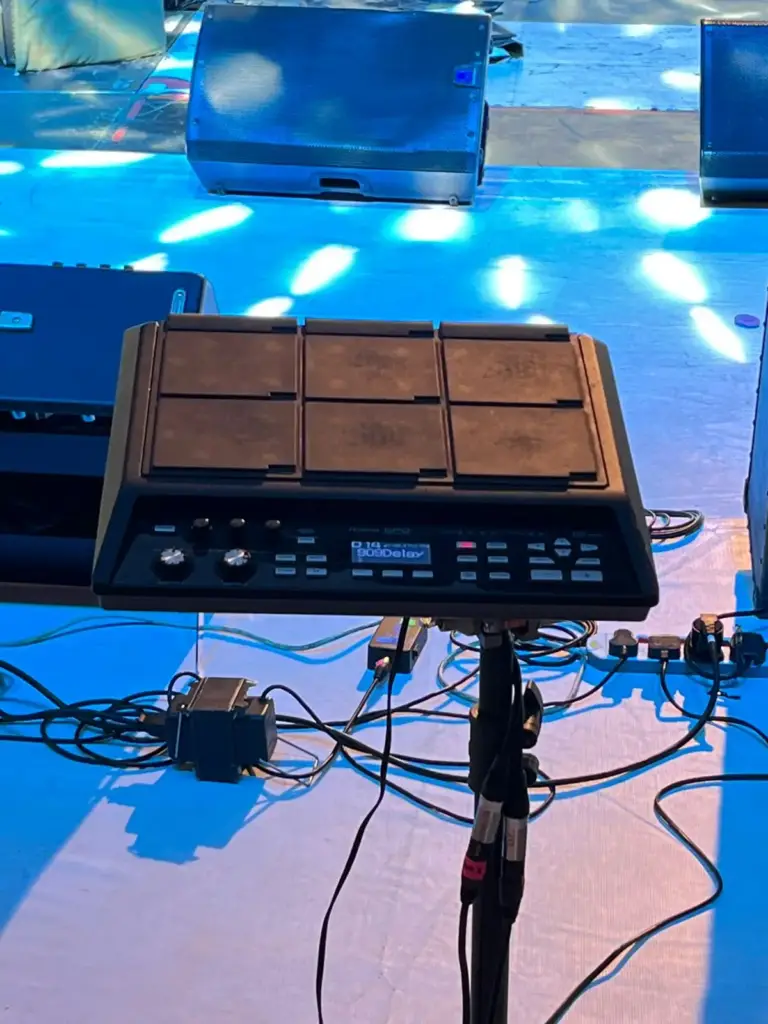
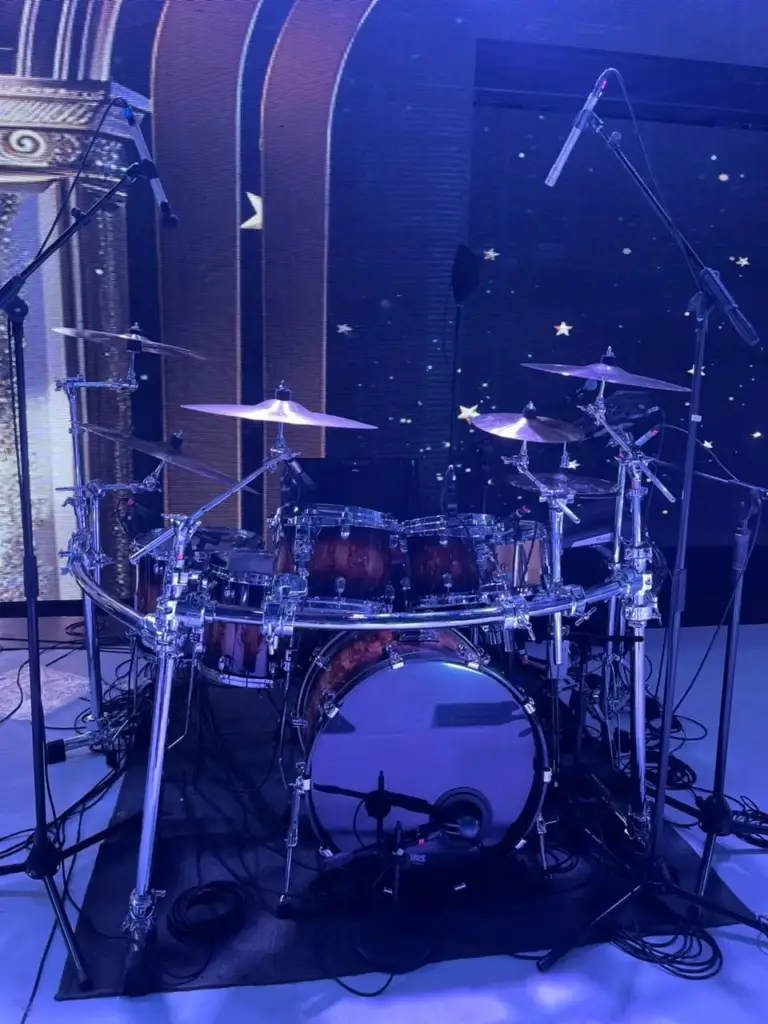
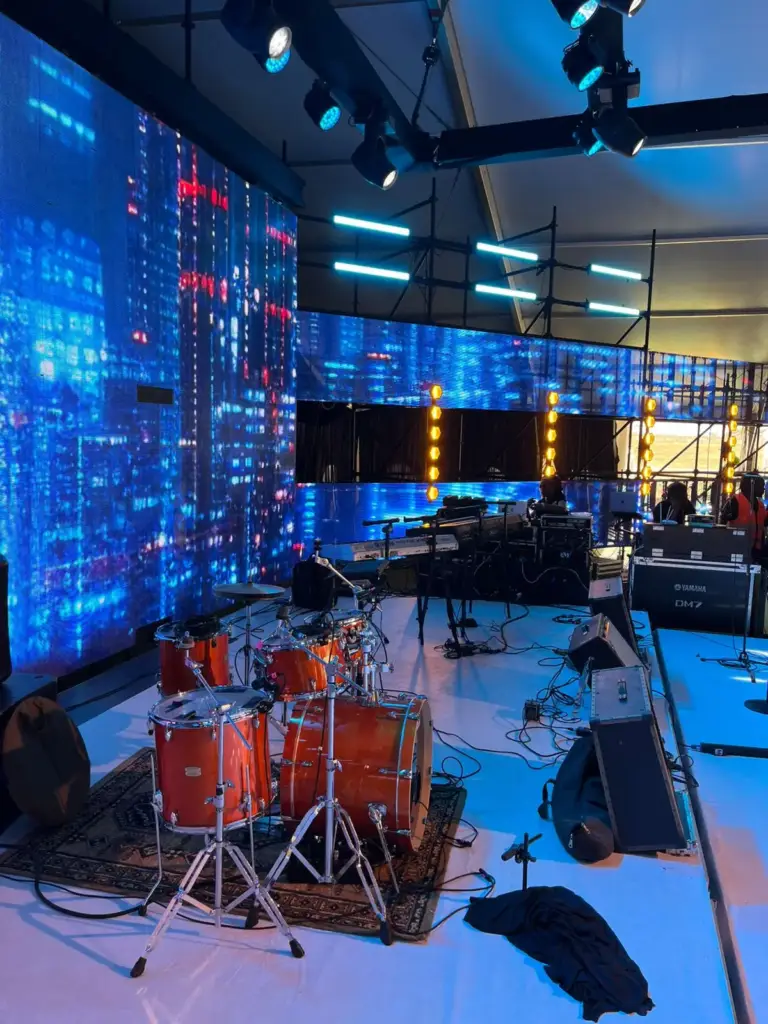
Frequently asked questions
What is backline hire?
Backline hire is renting the equipment musicians play on and through on stage: drum kits, bass and guitar amplifiers, keyboards and stands, plus the DI boxes, microphones and stands that connect them to the sound system. The hire company delivers it, sets it up, checks it and collects it after the show.
What is the difference between backline and a PA system?
Backline is what the musicians play and hear on stage. The PA is the sound system that carries the performance to the audience: the speakers, amplifiers and front of house desk. Most live events need both, and they are usually specified together.
What should a backline rider include?
The lineup, the equipment each performer needs with a model or class, what the band brings itself, an input list in channel order, a stage plot, the monitoring each person needs, and the load-in, soundcheck and set times.
Should artists bring their own gear or use a house backline?
At multi-act events a shared house backline is faster and more reliable, because the gear stays set and patched between acts. Artists bring only personal items such as instruments, pedalboards, sticks, cymbals and in-ear moulds. A touring band playing one long set may prefer its own full rig.
Does Backline Concepts provide crew with the backline?
Yes. Hire includes delivery, setup and collection, and we can add artist support for line checks and changeovers, stage monitor mixing and technicians on site for the whole event.
Do you hire backline outside Nairobi?
Yes. We are based in Nairobi and work across Kenya, including Nakuru, Naivasha, Mombasa, Diani, Kisumu, Nanyuki and Eldoret, and we travel for larger productions across East and Central Africa. Transport and crew nights are quoted separately.
How do I get a backline hire quote in Kenya?
Send the date, the venue, your lineup and any rider you have, or the list from the rider builder on this page. We reply within 24 hours with a specification and a price.