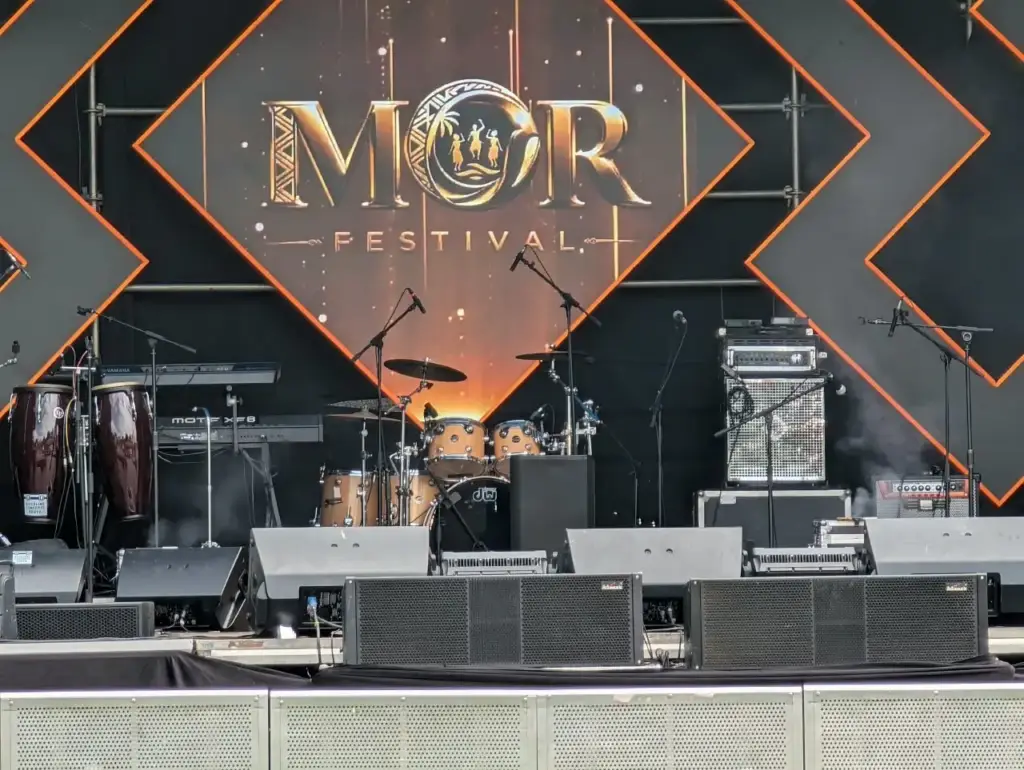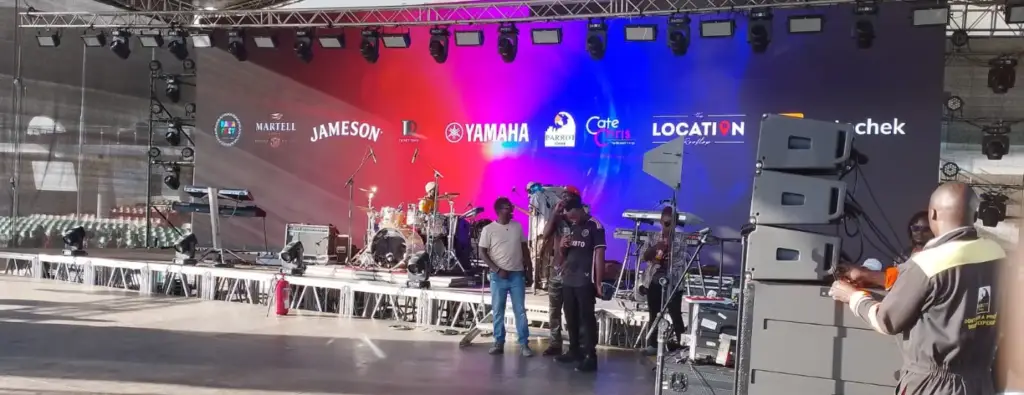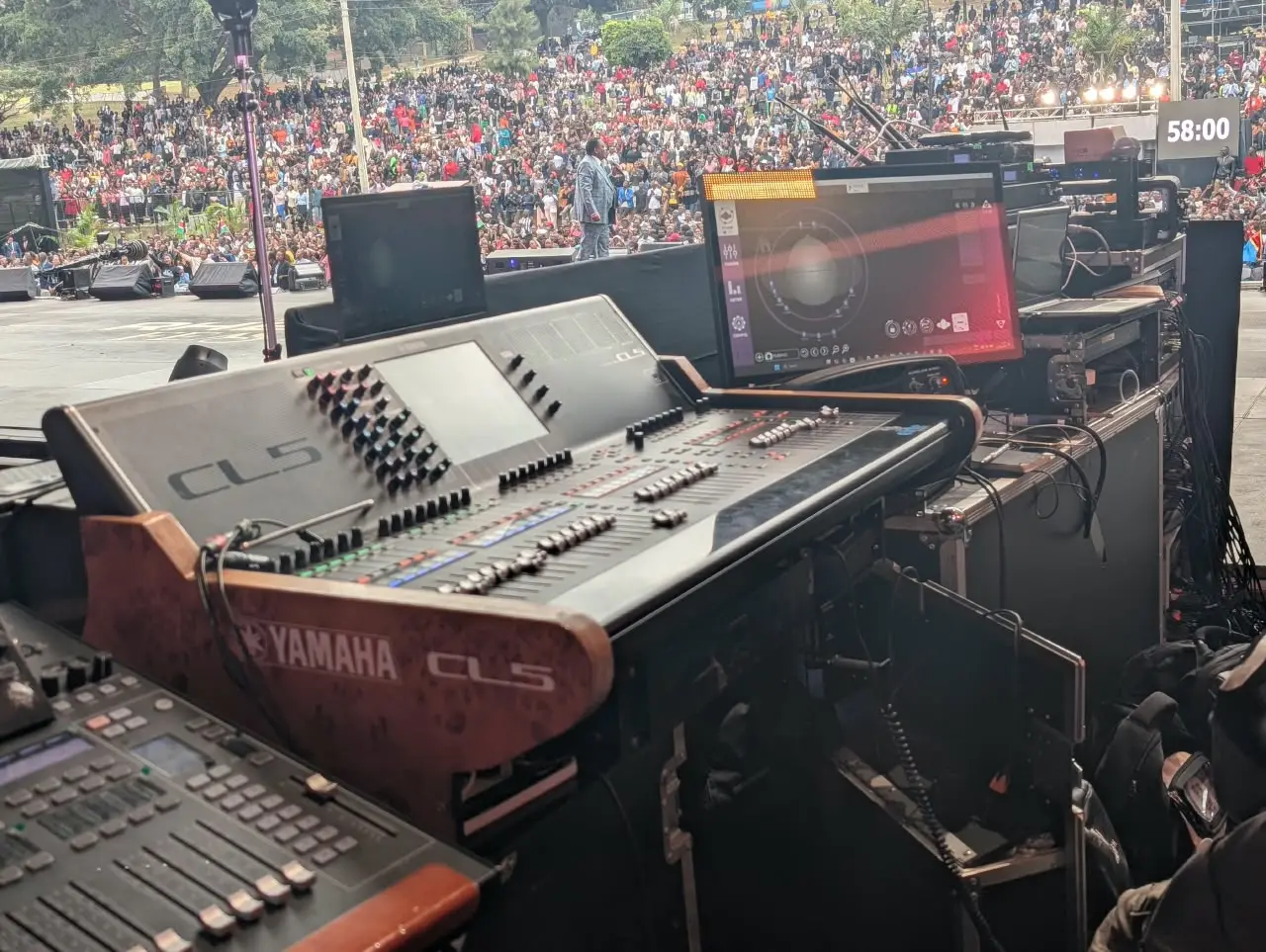
Short answer: Three things decide whether a large event sounds good. The backline, meaning the gear the band actually plays on. The live mix going out to the audience. And the monitor mix going back to the people on stage. Most suppliers in Kenya can do the first two to some standard. The third is where events are usually won or lost, and it is where we run immersive 3D in-ear monitoring with a KLANG:vokal processor.
Rhema Feast 2026 opened at Uhuru Park in Nairobi on 31 August and runs to 4 September, with worship leaders and ministers from Kenya and across Africa on the programme across five days. We have supplied Rhema Feast three years running now, in 2024, 2025 and again this year at Uhuru Park.
Events at that scale are the clearest version of the problem we solve. Many different worship teams, bands and vocal groups, one stage, one system, and a programme that cannot stop. Here is what that actually takes.
Backline: the gear the band plays on
Backline is the equipment on stage that the musicians touch. Drum kit, keyboards and stands, bass and guitar amplifiers, DI boxes, microphones, stands and cabling.
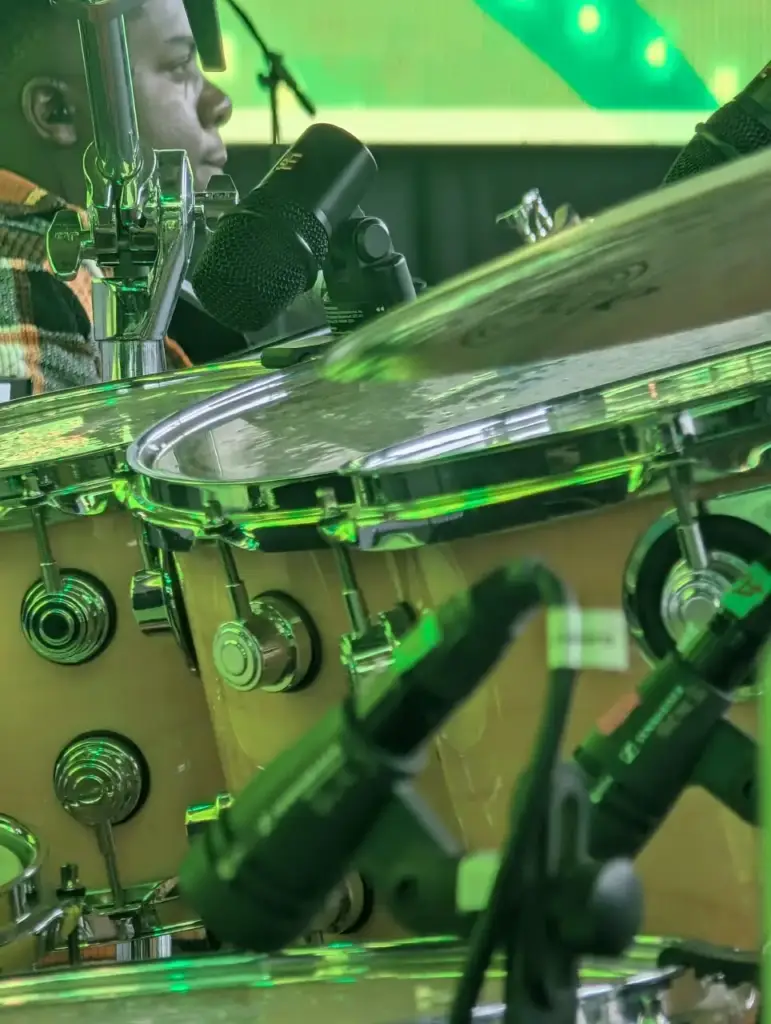
At a multi-artist event the temptation is to let every act bring its own. That is how programmes fall apart. Ten acts each rigging their own drums and amps means changeovers of thirty to forty minutes, and by day two the schedule has collapsed.
The answer is a shared house backline. One properly specified set of gear, set once, positioned and marked on the deck, with every input already patched and labelled at the stage box. Individual artists bring only what is personal to them: a guitar, a pedalboard, their own in-ear moulds. That is the core of our backline equipment rental.
What that gives you:
- Changeovers drop from forty minutes to under ten
- The engineer already knows the patch, so no rebuilding the desk between acts
- Gear is professional standard and maintained, not borrowed and hoped over
- Spares are on site, because a kick pedal or a DI will fail at some point in a five-day run
What is actually in our backline
The specification is the part that matters, so here is what we put on stage rather than a vague promise of quality equipment.
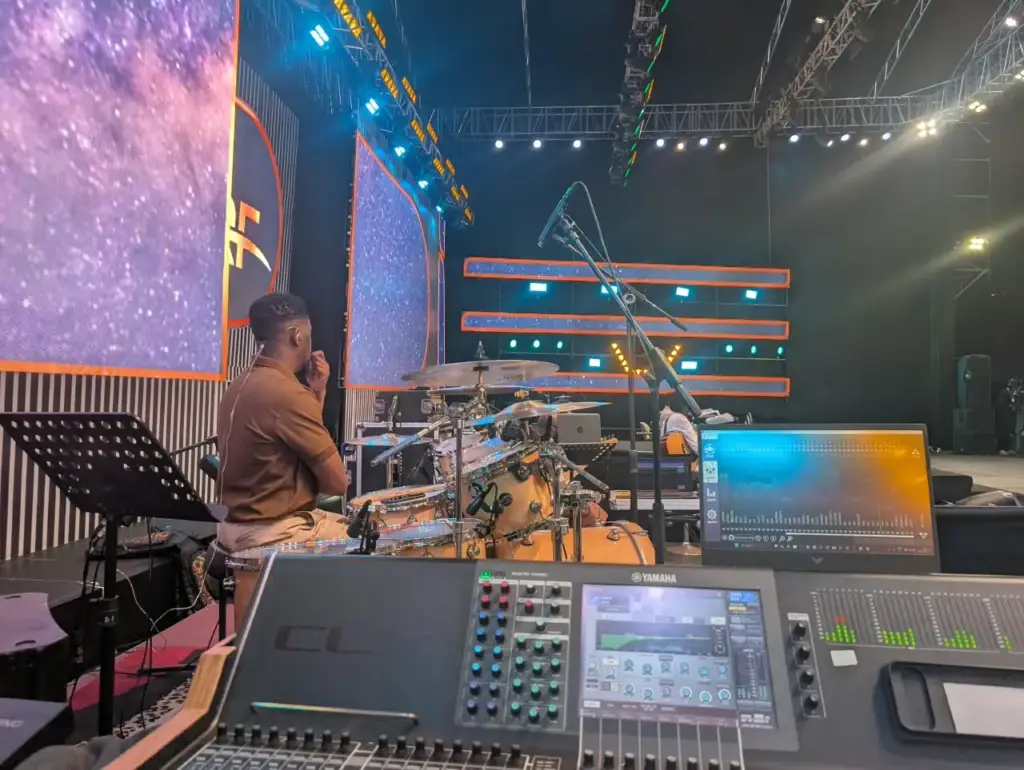
Drums. DW Performance Series seven piece and Tama Starclassic seven piece. Both are touring-grade kits that hold tuning through a long run and record well, which matters when the event is being filmed or streamed. Seven pieces also gives worship drummers the extra toms they usually ask for, instead of making them work around a four piece.
Keyboards. A range of stage keyboards led by the Yamaha Montage M8x, an 88 key weighted action instrument that covers acoustic piano, organ, pads and synth work from a single board. Most worship keys players can walk on and find what they need without loading in anything of their own.
Bass amplification. Ampeg SVT-4PRO and SWR bass amplification. The Ampeg is the standard most bass players already know, which removes a conversation on the day. Both give a clean DI feed to the desk alongside stage sound, so front of house is not depending on a microphone in front of a cabinet.
Guitar amplification. Marshall JVM, Fender Twin Reverb and Roland JC-120. Between those three almost any player is covered. The JVM handles gain and rock tones, the Twin Reverb gives the clean American voice, and the JC-120 is the clean pedal platform that worship guitarists build ambient rigs on. A player arriving with nothing but a pedalboard will find something that works.
Microphones. Shure ULXD and SLXD+ digital wireless systems. Wireless is where multi-artist events go wrong most often, through dropouts, interference and batteries dying at the worst possible moment. Digital wireless with proper frequency coordination and monitored battery status is the difference between a preacher being heard and a preacher being interrupted.
Specification matters. Gospel and worship programmes in Kenya routinely put larger vocal ensembles and bigger keys rigs on stage than a standard band chart assumes, so the backline is built for that from the start rather than patched together on the day.
Live sound and audio management
Audio management is the line item clients rarely notice on a quotation, and the one that decides whether the day runs.
It covers everything from the system design to the person holding it together on site:
- System design for the actual room or field. An open ground and a hall behave completely differently. Coverage is designed for the specific site, not copied from the last job, which is where large sound system rental starts.
- Patch and documentation. Every input numbered, labelled and matched to a stage plot for each act.
- Line check and sound check discipline. Every channel tested before anyone stands on stage, with time protected in the schedule for it.
- A single point of responsibility. One audio manager who owns the sound, talks to the production team, and makes the call when the programme runs late and something has to give.
- Spares and redundancy. Backup microphones, spare DIs, spare cable, and a plan for a channel dying mid-session.
Most audio disasters are not equipment failures. They are communication failures. Somebody changed the running order and nobody told the desk. Audio management is the discipline that prevents that.
Live mixing: what the audience hears
Front of house mixing is where it all lands. The engineer at the desk in the middle of the crowd is building, in real time, what thousands of people hear.
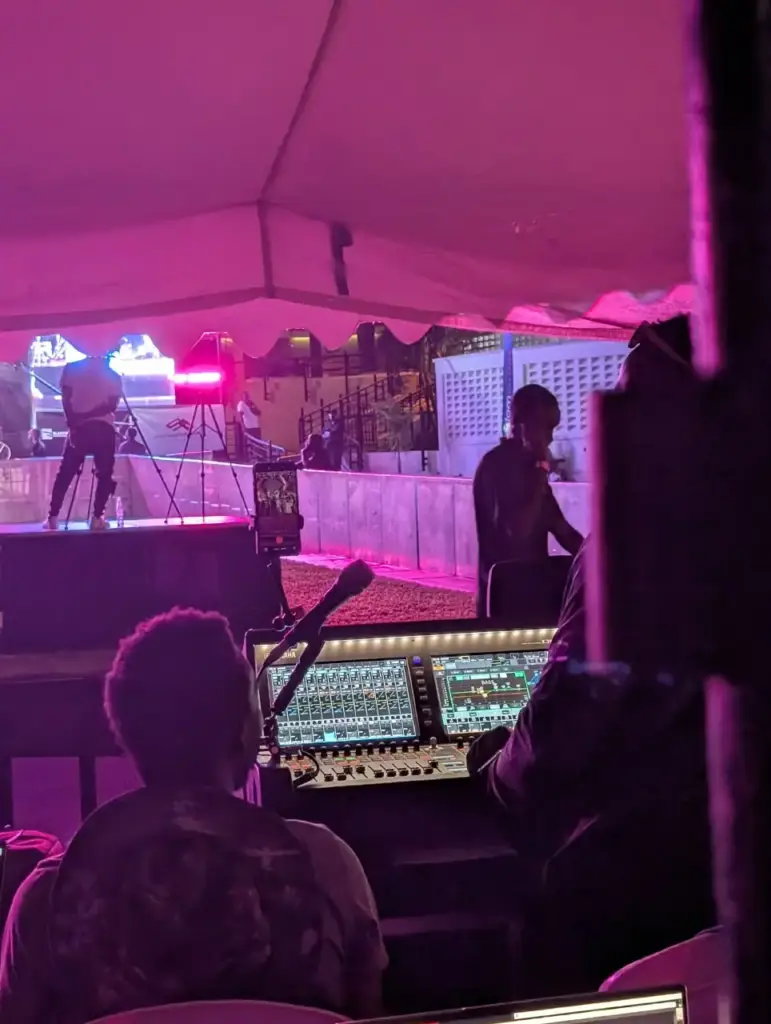
The job is not turning things up. It is:
- Balance. Keeping a worship leader, a choir, a full band and a preaching microphone all intelligible in the same mix, often inside the same song.
- Gain structure. Setting levels correctly at the source so nothing distorts and nothing has to be rescued later.
- Dynamics. A worship set moves from a whisper to full band in seconds. The mix moves with it without hurting the front rows or losing the vocal at the back.
- Feedback control. Ringing out the system before the event rather than fighting it during.
- Reading the room. A mix that works at soundcheck on an empty field is not the mix that works with thousands of bodies absorbing sound.
Speech matters as much as music. At a multi-day teaching programme, most of the hours are a person talking into a microphone. A mix where the band sounds great but the preaching is unclear at the back has failed.
Stage mixing: what the performers hear, and where we are different
This is the most underrated part of live sound and the one that most often ruins a performance.
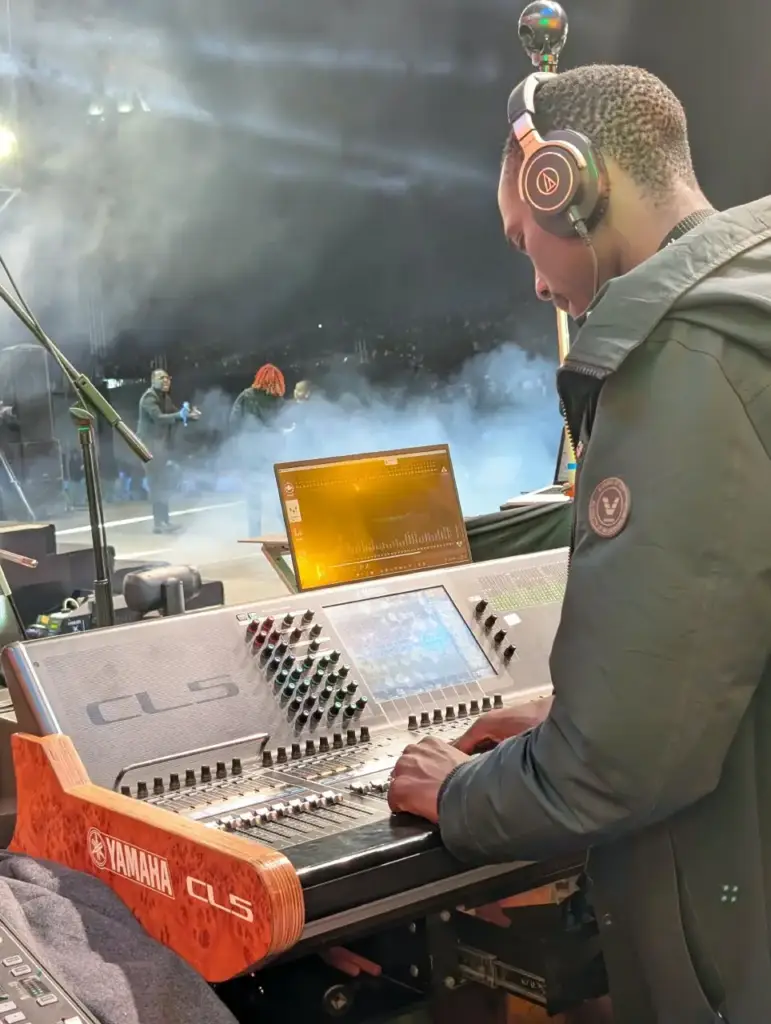
Stage mixing, or monitor mixing, is the separate set of mixes sent back to the people on stage. Everyone needs something different. The drummer needs bass and click. The worship leader needs their own voice and keys. Backing vocalists need each other far more than they need anything else.
For vocal-led events, monitors are not a comfort item. They are the pitch reference. A vocal group singing tight harmony cannot hold it if they cannot hear each other clearly. When a group sounds flat or ragged live, the monitor mix is usually the reason, not the singers.
The problem with normal in-ear monitoring
In-ear monitors solved a lot. They cleaned up the stage, cut the noise leaking into microphones and gave each performer a consistent mix.
But a standard in-ear mix is stereo, and stereo is a narrow space. Everything is stacked left, right or centre in a thin band across the middle of your head. So performers do what people always do when they cannot pick something out: they ask for it louder. Then the next person asks for something louder. The mix ends up loud, crowded and tiring, and many singers pull one earpiece out because it feels isolating and unnatural.
What we run instead: KLANG:vokal immersive in-ear monitoring
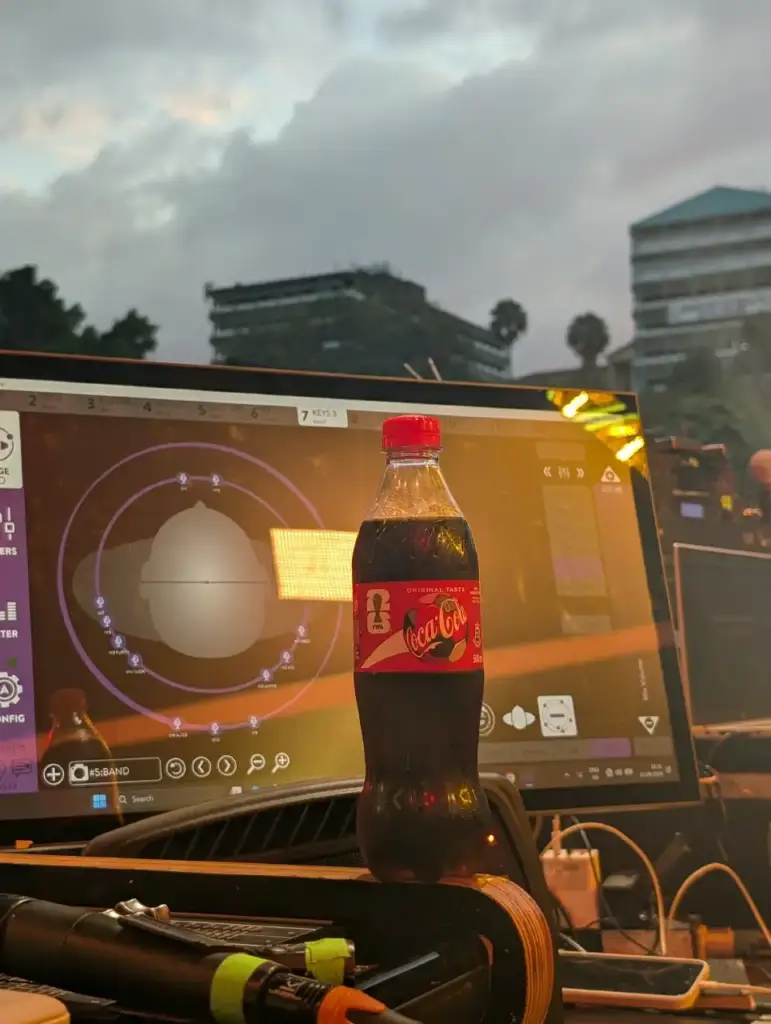
We run a KLANG:vokal, a 3D immersive in-ear monitor mixing processor from KLANG:technologies, now part of DiGiCo.
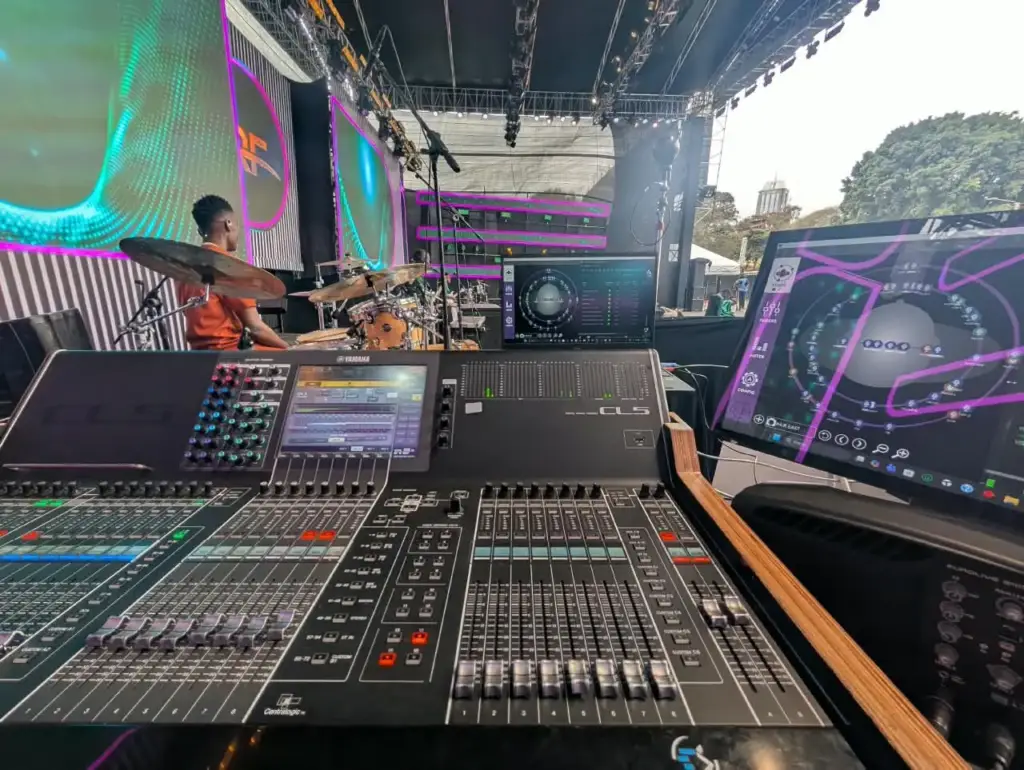
Instead of squeezing everything into a stereo image, it places each source in a three-dimensional field around the performer. The drums can sit behind them, the keys to the front left, their own voice directly in front, the rest of the vocal group spread around them the way people actually stand.
Why that matters on stage:
- Your brain can separate sounds that are in different places. You stop straining to pick your own voice out of a wall of sound.
- Levels come down. KLANG reports around 6dB lower listening levels on average, because sources merge instead of fighting each other.
- Less fatigue. That is the difference between a singer being fresh on night one and finished by night four of a five-day programme.
- The isolated feeling goes away. Performers keep both ears in, which means better pitch and better performance.
- Musicians control their own mix. Through the KLANG app on a phone or tablet, each performer sets and adjusts their own mix without shouting at the monitor engineer mid-song.
The technical specification, for those who want it: we run a 64 channel KLANG:vokal over Dante, giving 12 immersive in-ear mixes with Root Intensity EQs across the inputs and mixes. We drive it from a Yamaha CL5 or a DM7 depending on the event. The KLANG handles the stage mixes, so front of house stays a separate job on its own desk.
Why it matters most for worship and vocal events
Immersive monitoring has been adopted quickly by churches internationally, and the reason is simple. Worship stages are crowded. Multiple vocalists, keys, tracks, a click, a speaking microphone and often a choir, all needing to hear a different balance at once. That is exactly the situation stereo in-ears handle worst and immersive monitoring handles best.
If your event has a worship team, a choir, a vocal group or a lot of speaking, this is the specific thing we are built for.
Where we run this
Backline Concepts supplied Rhema Feast in 2024 at Kasarani Stadium, covering the large sound system, the full backline for the live band and technical support across the run. We returned for the 2025 edition, and we are supplying the 2026 programme at Uhuru Park.
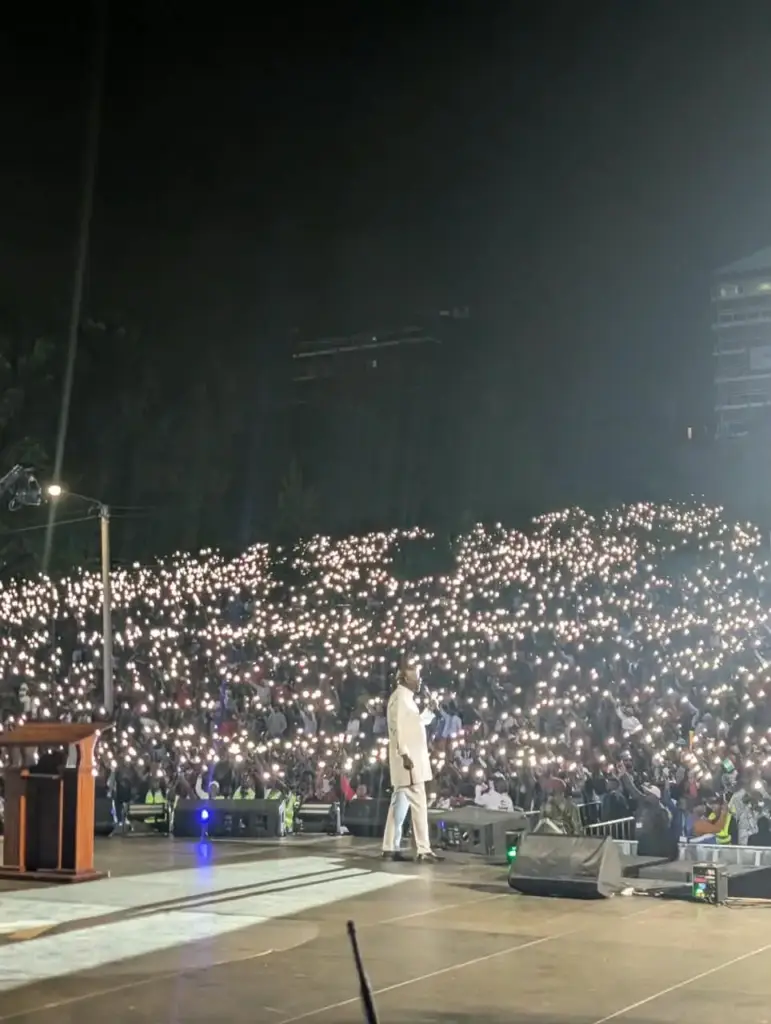
Three consecutive years on the same event is a useful test, because nothing about it gets easier. Every year brings a different bill, different worship teams and different technical riders, on a programme that cannot stop while somebody rebuilds a monitor mix. Those are exactly the conditions this rig is built for.
Frequently asked questions
What is backline equipment?
Backline is the equipment performers use on stage: drum kits, keyboards and stands, bass and guitar amplifiers, DI boxes, microphones and cabling. It sits behind the performers, which is where the name comes from.
What backline equipment does Backline Concepts Kenya stock?
Our house backline includes DW Performance Series and Tama Starclassic seven piece drum kits, Yamaha Montage M8x and other stage keyboards, Ampeg SVT-4PRO and SWR bass amplification, Marshall JVM, Fender Twin Reverb and Roland JC-120 guitar amplifiers, and Shure ULXD and SLXD+ digital wireless microphone systems.
Why rent a house backline instead of each artist bringing their own?
Speed and reliability. A shared house backline lets multiple acts perform on the same stage with changeovers under ten minutes instead of thirty or forty, and the engineer already knows the patch. On a multi-artist programme it is the difference between running on time and running late all day.
What is the difference between live mixing and stage mixing?
Live mixing, or front of house, is the mix the audience hears. Stage mixing, or monitor mixing, is the separate set of mixes sent back to performers so they can hear themselves and each other. They are different jobs with different goals, and at larger events they need different engineers.
What is immersive in-ear monitoring?
Immersive, or 3D, in-ear monitoring places each sound source at a specific position in a three-dimensional space around the performer instead of stacking everything into a narrow stereo image. Because the brain separates sounds by position, performers hear more clearly at lower volume, with less fatigue and without the isolated feeling of a standard in-ear mix.
What is KLANG:vokal?
KLANG:vokal is a 3D immersive in-ear monitor mixing processor made by KLANG:technologies, part of DiGiCo. It provides 12 immersive in-ear mixes and performers can control their own mix from an app on a phone or tablet. We run a 64 channel unit over Dante, driven from a Yamaha CL5 or DM7.
Can performers control their own monitor mix?
Yes. With the KLANG app each musician or vocalist adjusts their own mix and the position of each source in the 3D field from a phone or tablet, without interrupting the monitor engineer during a song.
Do we need in-ears or floor wedges?
Wedges are simpler and some performers prefer them. In-ears keep the stage quiet, improve what the audience hears and give each performer a consistent mix. For worship teams, choirs and vocal groups we recommend in-ears, and immersive in-ears where the budget allows.
Do you provide engineers as well as equipment?
Yes. We provide technical support for events, covering system setup, line checks, front of house mixing and stage monitor mixing, plus artist support and equipment setup on the day.
Has Backline Concepts worked on Rhema Feast?
Yes. We supplied Rhema Feast in 2024 at Kasarani Stadium, returned in 2025, and are supplying the 2026 programme at Uhuru Park.
How do I get an accurate quotation?
Share the venue, date, expected crowd size, number of acts, and whether a choir or vocal group is involved. Those details determine the system design, the backline specification and how many monitor mixes you need.
Talk to us about your event
Backline Concepts Kenya provides backline equipment rental, audio equipment and large sound system rental, live sound engineering, front of house mixing, and immersive 3D in-ear monitor mixing for concerts, church gatherings, corporate functions and weddings across East and Central Africa.
If you have never heard your own worship team through an immersive in-ear mix, come and hear it. It is the fastest way to understand the difference.
Talk to us about your event, or call +254 718 286 302 or +254 720 624 977.